
We loaded speedtest.net. It made over 500 requests to ads and trackers in 1 minute.
Loading a single website to test your internet speed can result in your information being sent to hundreds of companies.
What did we do?
We put a new Windows 11 PC on Ouzel's secure network. Ouzel monitored what websites this computer reached out to as we tested our internet connection.
For this test, we had Ouzel's blocking turned off, so we could capture the entire process of loading websites from start to finish.
Ouzel typically blocks connections to ads, trackers, analytics, and other unwanted content on the internet. These connections are made in the background, sending data to companies for use in analytics and to serve you targeted ads.
Ouzel's dashboard shows you each connection. Using it, we noticed a massive number of connections coming from one website in just a few seconds.
The short version
- 529Requests to ads and trackers
- 366Different websites contacted
- 63Seconds of browsing
Why it matters
Would you feel comfortable if we told you that every time you open a website, your data is sent to hundreds of tracking and advertising companies?
That's exactly what happens when your browser loads an advertisement. Potentially hundreds of companies receive your data in a fraction of a second, match it to what they know about you, and decide how valuable of a customer you are. Then, they can bid on showing you their ad.
The highest bid wins, and that's the ad you see.
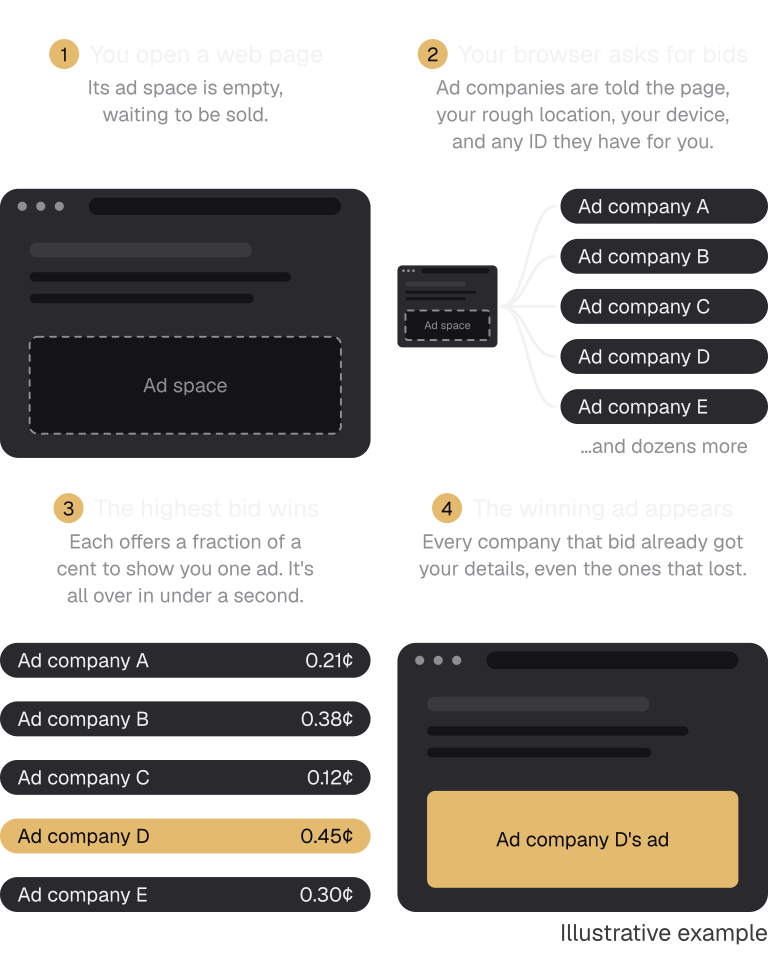
Wait a second, did you notice that too? Every company, including any that didn't win the auction or even bid, gets your data and identity.
Unfortunately, blocking ads on one device doesn't solve this problem. Many devices - your phone, smart TV, and even home assistant - may be feeding data into this system, helping companies better sell to you.
What the device tried to reach
We charted how many requests the browser made in 5 second chunks. A "DNS lookup" here just means one attempt the website made to reach a new service on the internet, like an advertiser. Let's take a look.

We can see the website making several hundred requests within the first few seconds. These requests initialize the ad-bidding process and begin the internet speed test.
There's a second hump in the graph when the speed test finishes and new ads show on the results page.
Want the device that made this possible?
Ouzel is in development. Join the waitlist and get early access.
Unsubscribe any time. Privacy policy
If you break down all requests by category, things get really interesting.

So the website made only 29 request to its own services, to actually execute the speed test, but 473 for advertising.
It almost seems like this website's priority is not to test your internet.
The bottom line
We built a device that says no
Ouzel is a small box that sits next to your router. Plug it in, connect your devices to it, and it blocks trackers while the internet keeps working. You don't need to configure settings or tinker with servers to block ads and trackers.
And it's not just for computers. Anything you connect to it gets the same protection: smart speakers, doorbells, thermostats, phones, tablets, and more.
Want the device that made this possible?
Ouzel is in development, and we are targeting a 2027 release. We anticipate all of the functionality you've already seen and way more. Join our waitlist at no cost to stay up-to-date with the project.
Unsubscribe any time. Privacy policy